Who this is for
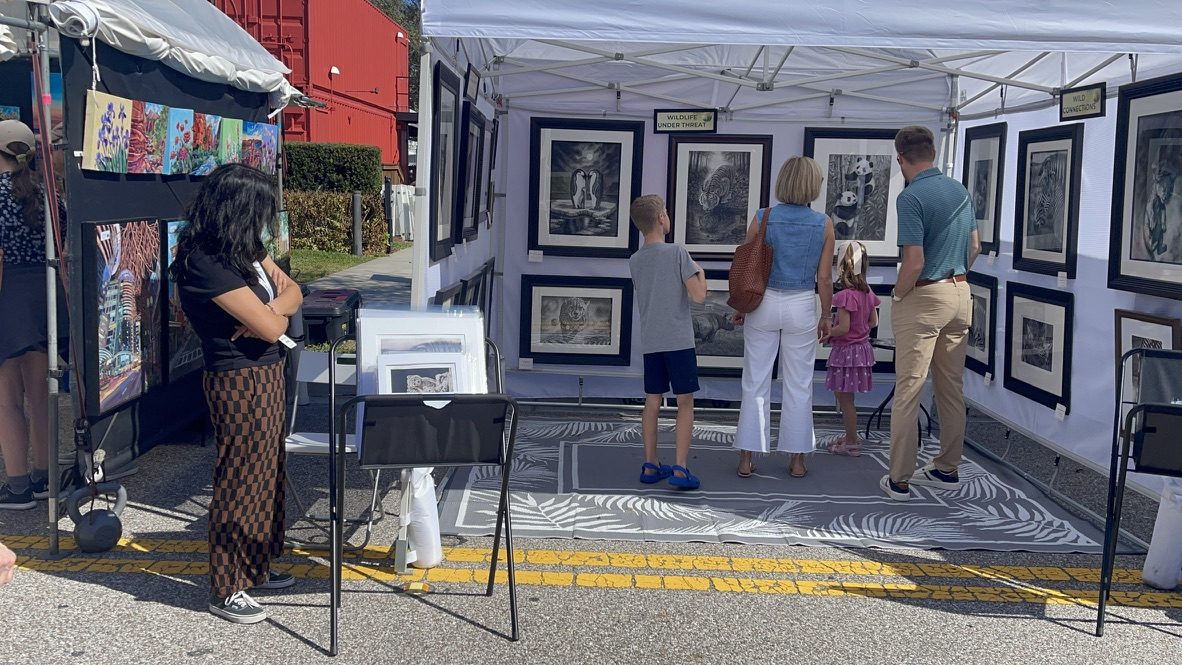
We built this platform for the working artist. Specifically: the painter who does six to twelve festivals a year, the jeweler whose Etsy shop is now a real fraction of their income, the ceramicist who has graduated from "selling at the local market" to managing a serious inventory, the sculptor whose commissions now require a calendar, the wall-decor maker whose Instagram following just turned into a real customer base.
If your art income is meaningful enough that it shows up on your tax return, but small enough that you cannot justify hiring a bookkeeper, this is for you. If you have a studio — even if that studio is your kitchen table — and you are tired of opening a shoebox of receipts at the end of every quarter, this is for you. If you have ever come home from a festival and thought "I think that was good, but I'm not sure," this is built for that exact moment.
Who this is not for
We're honest about who this isn't for. If you are a casual hobbyist who paints for fun and occasionally gives a piece to a friend, you do not need The Booth Pulse. If you are an art student still figuring out your medium and your style, you do not need The Booth Pulse. If you are an established artist with gallery representation, a manager, and a CPA, you almost certainly already have the equivalent of The Booth Pulse, possibly built around a much more expensive accounting suite.
We sit squarely in the middle. We serve the working artist between those two ends of the spectrum — the largest, most underserved, and most invisible cohort in the independent art world.
What we believe
Talent is not enough.
It never has been. Every era of art history is full of brilliant artists who couldn't make a living because they couldn't manage the business of being an artist. We don't think this is fair, but we think it is true. The role of a platform like this is to remove as much of that business friction as possible so the talent has room to do its work.
The artist owns the creative decisions. We just do the math.
The Booth Pulse will never tell you what to paint, what medium to work in, or how to evolve your style. Those are decisions only you can make. What we will do is hand you the numbers that should inform the business decisions around your art — pricing, festivals, commissions, follow-ups — so the creative decisions stay free.
Privacy is non-negotiable.
Your inventory, your sales data, your customer list, your follow-up notes — these belong to you. We do not sell them, we do not aggregate them, we do not feed them to anyone else's AI. Row-level security in our database means even our own engineers cannot read your data without explicit authorization. Export everything to CSV any time you want.
Pricing should be honest.
We charge a flat monthly subscription. We do not take a commission on your sales. We do not have hidden fees. We do not have a "free trial" that turns into a charge you forgot about. If you cancel, you cancel; if you downgrade, you downgrade. The only money that ever flows from you to us is the subscription itself.
Where we come from
The Booth Pulse was built by a team that had spent enough years watching working artists try to wedge their businesses into tools designed for other people — QuickBooks, Square, Excel, Notion, Trello, generic CRMs — to know that none of them quite fit. The way an artist's business runs is genuinely different. The seasons matter differently. The "products" are unique. The customers are emotional buyers, not enterprise procurement officers. The artist is the company, the brand, and the entire production line.
We started by building one feature: a per-festival ROI calculator that we wished we had ourselves. Friends asked to use it. Friends of friends asked. We added inventory, then commissions, then follow-ups, then analytics, then pre-show and post-show workflows, then the gallery features. Six years later, what started as one calculator is the seven-module platform you see here.
What we are not
We are not a marketplace. We do not list your work, take a cut, or compete with you for buyer attention. Etsy, Saatchi, Society6, and Artfinder do that; they are good at it; we are not them.
We are not a website builder. We have a public portfolio feature for serious sellers, but if what you want is a full marketing website with a blog and a custom domain, use Squarespace or Cargo. Use the right tool for the job.
We are not a social network for artists. Instagram and TikTok are still where audience discovery happens. We help you turn an audience into a business; we do not help you build the audience.
We are the layer underneath all of that. The boring, indispensable layer that knows what you have, what you sold, what it cost you, what's coming up, who hasn't been followed up with, and what your real margin actually is.
The future we're building toward
In five years, we want every serious independent artist in the country to know, by the end of any given festival weekend, exactly what their ROI was for that show, exactly which pieces sold, exactly which followups need to happen, and exactly what their year-to-date margin looks like — without doing math, without opening a spreadsheet, without a bookkeeper, without a manager.
We want the answer to "how was your show?" to stop being a feeling and start being a sentence: "$2,400 gross, 38% margin after travel, fourteen new leads, three commissioned pieces queued for the next quarter, and I'm definitely going back next year." The artist who can answer that way is the artist who is going to still be making art ten years from now.
That is the future we are building toward. We hope you'll build it with us.
Privacy at The Booth Pulse
Your data belongs to you. That is not a marketing line — it is the architectural foundation of the platform. Every table in our database enforces row-level security scoped to your account, which means that even our own engineers cannot read your inventory, sales, customer list, or follow-up notes without your explicit authorization.
Here is the short version of how we handle your information:
- We never sell your data. Not to advertisers, not to aggregators, not to other analytics companies, not to anyone. Ever.
- We do not train AI models on your customer lists or private notes. Analytics inside the platform are computed on your own data for your own dashboards.
- You can export everything to CSV, at any time, in one click. No lock-in.
- You can delete your account and your data permanently. Within 30 days of your request, everything is purged from active systems.
- We comply with GDPR (EU/UK), CCPA/CPRA (California), and PIPEDA (Canada). Wherever you live, you have real, exercisable rights over your data.
- Payment information is handled by certified processors. We never see or store your full credit card number — Stripe does.